
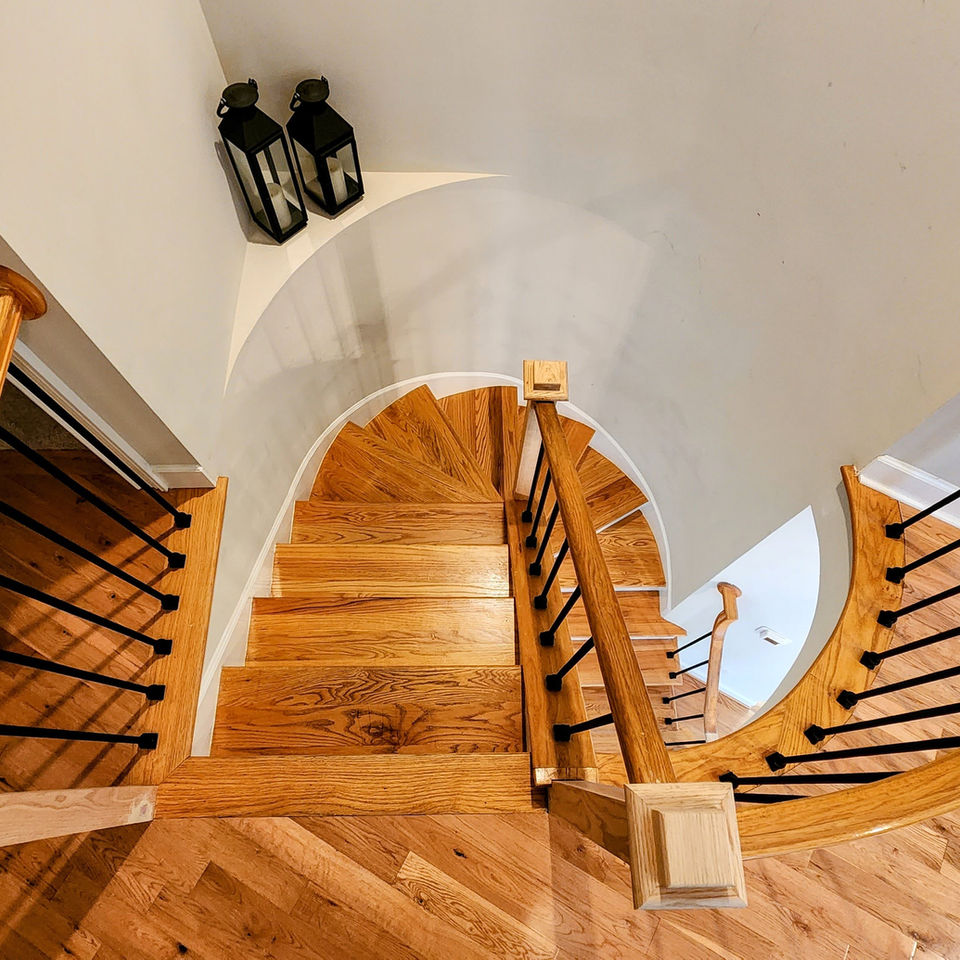
Your staircase is often the first architectural element guests see when entering your home. It’s a vertical focal point that connects floors both physically and visually — and when it’s outdated, worn, or generic, it drags down the entire interior. The good news? A staircase renovation doesn’t require tearing out the entire structure. New railings, balusters, newel posts, and staircase trim can completely transform the look and feel of your Charleston home’s entryway.
In this guide, we’ll explore the components of a staircase renovation, popular styles for Charleston homes, material options, and what to expect from the process. Whether your staircase has builder-grade oak balusters from the 1990s or you’re updating a historic Charleston home’s worn railings, this guide will help you plan a stunning transformation.
Staircase Components: Understanding the Anatomy
Before diving into style options, let’s identify the key components that make up your staircase’s visual appearance:
- Handrail: The rail you grip when ascending or descending. Available in dozens of profiles from simple round to ornate detailed shapes.
- Balusters (spindles): The vertical posts between the handrail and stair treads. These have the biggest visual impact and come in countless styles.
- Newel posts: The larger structural posts at the top, bottom, and turns of the staircase. They anchor the railing system and serve as design focal points.
- Treads: The horizontal surface you step on. Can be carpeted, hardwood, or painted.
- Risers: The vertical face between treads. Often painted white for contrast with wood treads.
- Stair skirt (stringer trim): The trim board running along the wall side of the staircase, covering the gap between stairs and wall.
- Rosettes: Decorative blocks where the handrail meets a wall.
Popular Staircase Styles for Charleston Homes
Traditional/Colonial
Turned wood balusters with detailed profiles, box newel posts with recessed panels, and a profiled handrail. This style honors Charleston’s architectural heritage and works beautifully in traditional and transitional homes throughout Charleston and Mount Pleasant.
Modern/Contemporary
Clean-lined square balusters (often metal), simple rectangular newel posts, and a sleek handrail profile. This style uses contrast — dark metal balusters against white-painted components, or natural wood against white walls — for visual impact without ornamentation.
Craftsman
Square, tapered balusters with mission-style newel posts. The Craftsman aesthetic emphasizes honest materials and simple geometry. It’s perfect for bungalows and Arts & Crafts-inspired homes in Summerville and North Charleston.
Iron & Wood Combination
Wrought iron or metal balusters paired with wood handrails and newel posts. This combination offers the best of both worlds — the warmth of wood with the elegance and durability of metal. Iron balusters are available in dozens of designs from simple straight bars to ornate scrollwork.
Cable Railing
Horizontal stainless steel cables between wood or metal posts. This contemporary style maximizes visual openness and light flow. It’s particularly popular in coastal homes on Isle of Palms where maintaining sight lines and a light, airy feel is priority.
Tread and Riser Options
Hardwood Treads
Replacing carpeted stairs with hardwood treads is one of the most popular staircase upgrades. Options include:
- Red oak: The traditional choice — durable, takes stain well, and matches most existing hardwood floors
- White oak: Harder than red oak with a more contemporary grain pattern. Extremely popular in modern renovations
- Hickory: The hardest domestic wood — ideal for high-traffic staircases with dramatic grain variation
- Maple: Light-colored, fine-grained, and very hard. Perfect for contemporary and Scandinavian-inspired interiors
Painted Risers with Wood Treads
The most popular combination is stained wood treads with painted white risers. This creates beautiful contrast, highlights the horizontal lines of the staircase, and is easier to maintain than all-wood construction.
Stair Skirt and Wall Trim
The stair skirt — the trim board running along the wall beside the stairs — is often overlooked but makes a significant difference in the finished look. Options include:
- Simple flat skirt: A clean, modern approach with a flat board following the stair angle
- Profiled skirt: A skirt board with a routed profile on the top edge, adding detail
- Paneled wall treatment: Wainscoting along the staircase wall creates a high-end, fully finished look
The Renovation Process
A staircase renovation at DiLeo’s Carpentry LLC typically follows this process:
- Assessment: We evaluate your existing staircase structure, identify what can be preserved vs. replaced, and discuss your style goals
- Design: We help you select baluster styles, newel posts, handrail profiles, and tread/riser materials that create your desired look
- Removal: Existing balusters, railings, and any components being replaced are carefully removed
- Installation: New components are installed with precision — every baluster plumb, every joint tight, every transition smooth
- Finishing: Staining, painting, and final detail work complete the transformation
Most staircase renovations take 3-5 days depending on scope. During this time, we maintain safe access between floors using temporary railings where needed.
Cost Considerations
Staircase renovation costs depend on:
- Number of balusters being replaced
- Material choices (wood vs. iron balusters, standard vs. premium newel posts)
- Whether treads and risers are being replaced
- Handrail length and complexity (straight runs vs. curves and transitions)
- Stair skirt and wall trim additions
- Finishing requirements (staining, painting)
We provide detailed estimates that break down every component so you can make informed decisions about where to invest. Contact us for a free consultation and quote.
Frequently Asked Questions
Can I update my staircase without replacing the treads?
Absolutely. Many homeowners choose to replace only the balusters, newel posts, and handrail while keeping existing treads. If your treads are in good condition, refinishing them (sanding and re-staining) combined with new railing components creates a dramatic transformation at lower cost.
Are iron balusters more expensive than wood?
Iron balusters are typically more expensive per piece than standard wood balusters, but the installation labor is similar. The total cost difference for a typical staircase is moderate, and many homeowners find the durability and style of iron balusters worth the premium.
Do I need a permit for a staircase renovation?
In most cases, cosmetic staircase renovations (replacing balusters, railings, treads) don’t require permits as long as the structural stringer isn’t modified and the finished railing meets building code height requirements (36″ minimum for stairs, 42″ for landings). We ensure all our installations meet current code.
How do I maintain my new staircase?
Wood components should be dusted regularly and cleaned with a damp cloth. Avoid harsh chemicals. Iron balusters are virtually maintenance-free — just dust occasionally. For stained wood treads, we recommend refreshing the topcoat every 3-5 years depending on traffic.
Conclusion
A staircase renovation is one of the most visually impactful upgrades you can make to your Charleston home. New railings, balusters, and trim transform the entire entryway experience — from dated and generic to stunning and custom. Whether you prefer traditional turned wood, modern iron, or coastal cable railings, professional installation ensures a result that’s safe, beautiful, and built to last.
DiLeo’s Carpentry LLC specializes in staircase trim and renovation throughout the Charleston Lowcountry. As a veteran-owned business, we bring precision and craftsmanship to every project. Request your free estimate today and let’s transform your staircase.
References
- International Residential Code — Stairway Requirements (Section R311.7)
- National Association of Home Builders — Staircase Design Trends
- Architectural Woodwork Institute — Stair Component Standards
 Veteran-Owned
  5-Star Rated
  24hr Response